Sustainability
Committed to Responsible Production
Our decisions are guided by respect for the environment, the communities we serve, and the traceability of every ingredient.
Our Responsibility
Sustainability isn't a policy; it's our promise. The future of aquaculture depends on responsible resource management, ecosystem protection, and ensuring that communities thrive alongside shrimp aquaculture.
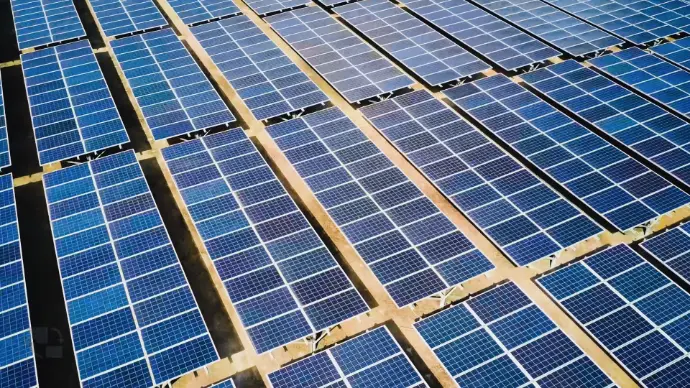
Solar energy
Our production facilities utilize solar panels to harness clean, renewable energy, reducing carbon emissions and promoting sustainability.

Best Labor Practices
We maintain fair and safe working conditions, ensuring our teams are empowered, respected, and protected at every step.
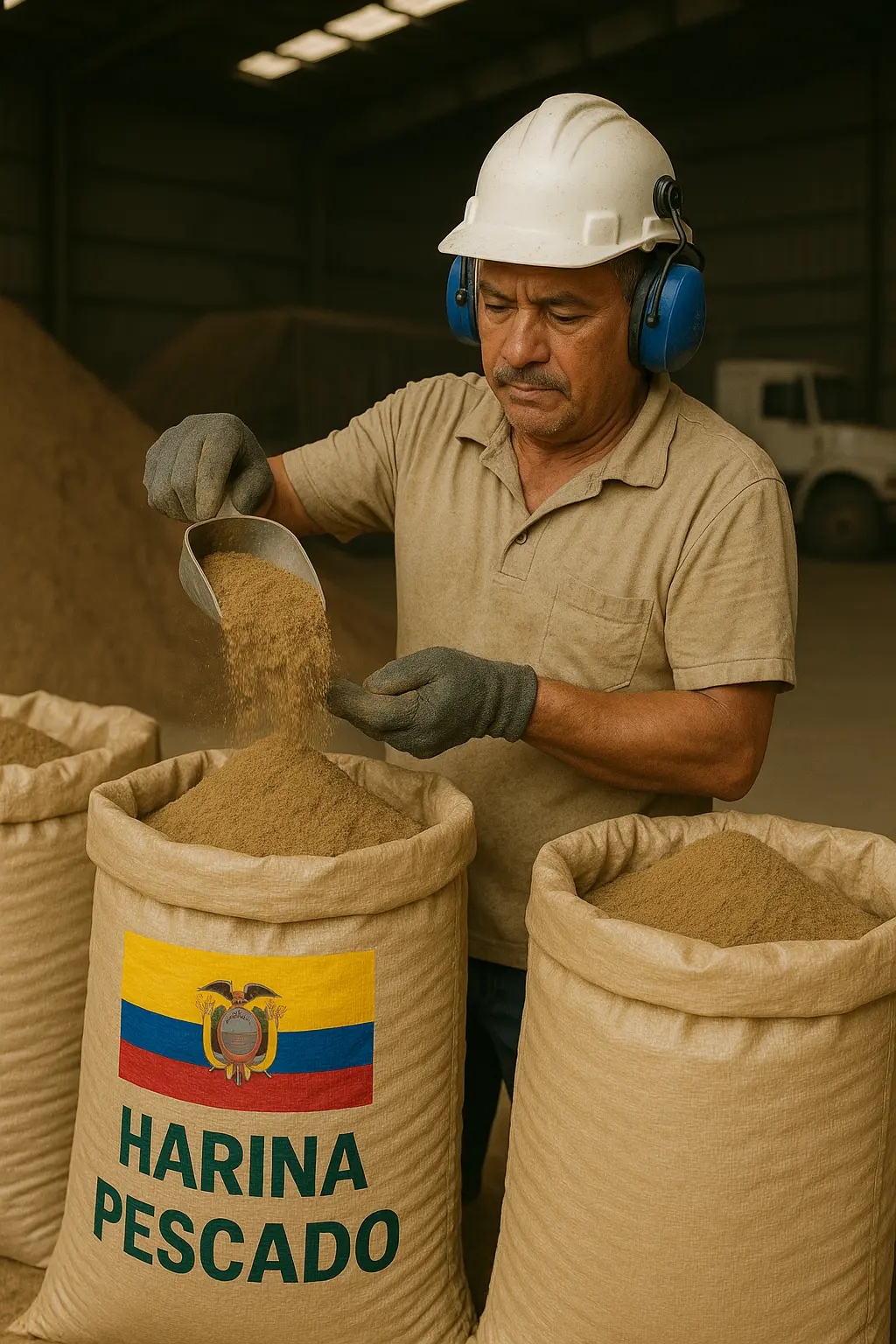
Local Supply
We prioritize high-quality, locally sourced ingredients to support Ecuadorian farmers and reduce our environmental impact.

Responsible Sourcing Policy
In line with our commitment to sustainable supply chain development, we have implemented the Responsible Sourcing Policy. This policy reflects our values and ethical principles and aims to establish and communicate the standards we promote and expect our suppliers to meet. Furthermore, we have developed a procedure to identify and analyze the sustainability risks associated with ingredient suppliers and raw material manufacturers. In this case, the purchasing manager must ensure that products have a minimal environmental impact on fishing and agriculture, which in turn will promote the strengthening of the environment and a socially responsible supply chain.
Code of Conduct
The first step is to verify that suppliers comply with our Code of Conduct, which is designed to identify and manage potential social and environmental risks associated with ingredients.
This Code is reinforced by a due diligence process that we apply to both raw material producers and ingredient manufacturers, regardless of whether they are local or international. We know we're making progress by collaborating with responsible business partners, so we only work with those who follow the standards of our Supplier Code of Conduct.
To carry out this initial assessment, we need the following:
• The ingredient data sheet.
• Certifications recognized by ISEAL or an ASC-approved system.
• Confirmation of compliance with our Code of Conduct.
• A risk assessment based on the Due Diligence process.

Ingredients of Marine and Vegetable Origin
Producers of both marine and plant-based ingredients must implement sustainable practices, ensuring that their production processes meet the environmental standards established by the Sustainable Development Goals (SDGs).
For marine-based ingredients, raw materials must come from certified sources that meet standards such as MARIN TRUST, MSC, SMETA, RFVS, and FIP. Furthermore, manufacturers must ensure that the species used are not wild-caught fish listed as critically endangered or endangered according to the IUCN (International Union for Conservation of Nature) Red List. For reduction fisheries, documentation demonstrating that the catch does not come from species included in that list will be required, in accordance with the FAO Code of Conduct for Responsible Fisheries.

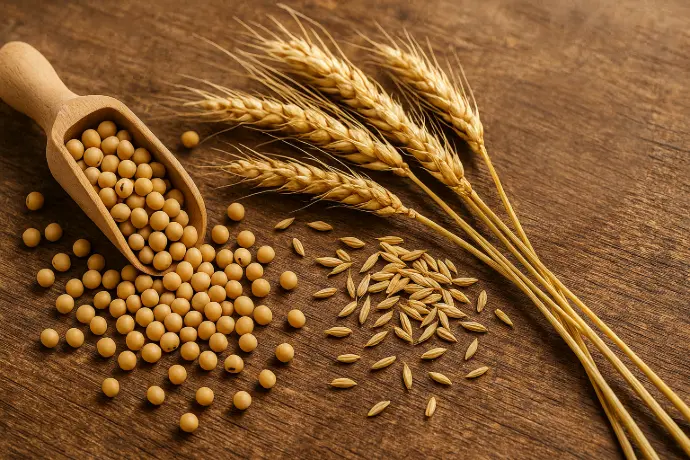
Furthermore, producers of plant-based ingredients must ensure that they come from areas that have not been subject to illegal deforestation or the conversion of agricultural land into high conservation value areas. The standards applied must be aligned with the FEFAC Guidelines and have recognized certifications such as RSPO, RTRS, DONAU SOJA, PROTERRA, ISCC PLUS, and RAINFOREST.
Our Ingredients
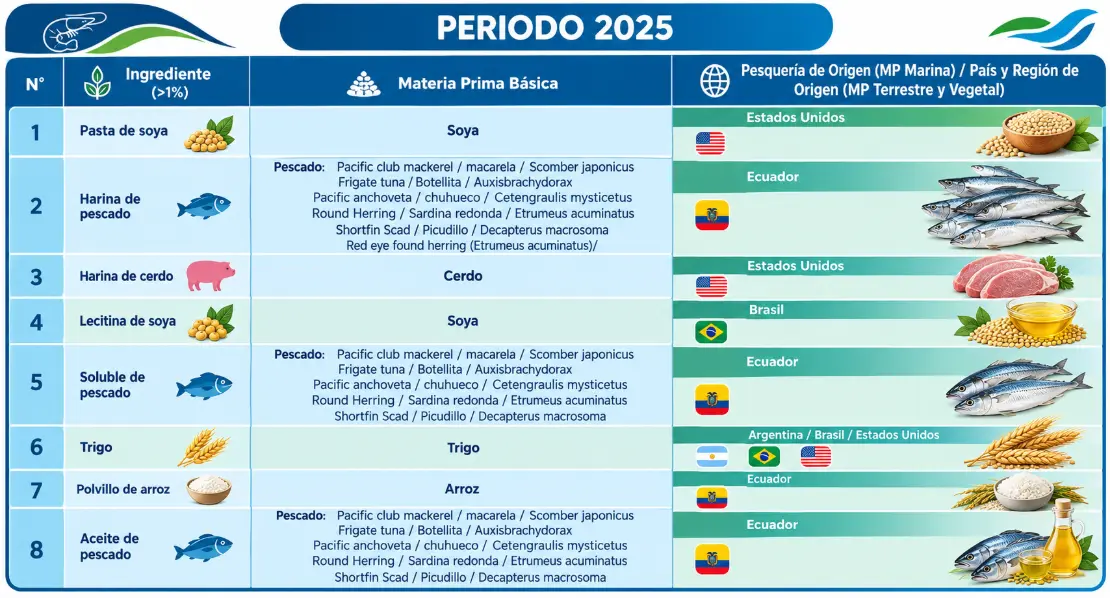
Our Ingredients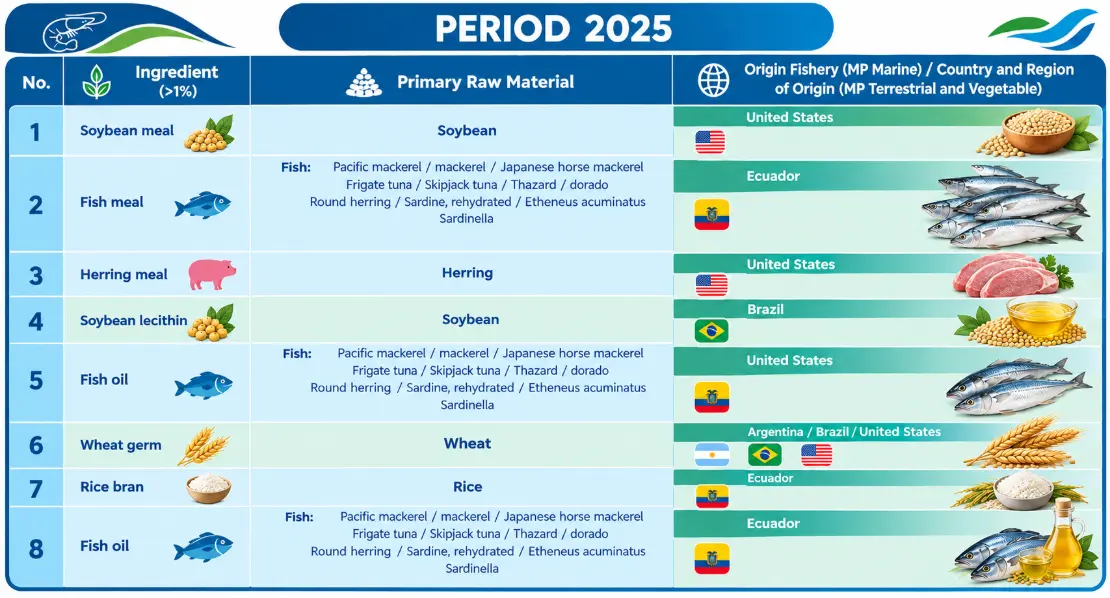
Nº | Ingredient | Basic raw material | Fishery of origin (marine MP) / country of origin (terrestrial MP) |
1 | Soybean paste | Soy | USA |
2 | Wheat | Wheat | USA |
3 | Soy lecithin | Soy | Estados Unidos / Brazil |
4 | Fishmeal | Bottle / Chuhueco / Macarela / Red eye round herring | Ecuador |
5 | Fish oil | Bottle / Chuhueco / Macarela | Ecuador |
6 | Poultrymeal | Chicken | USA |
Responsible Sourcing for a Sustainable Future
Our sourcing policy prioritizes marine and plant-based ingredients from responsible sources that meet ASC food factory certification guidelines in the context of the Sustainable Development Goals (SDGs). We are committed to constantly evaluating our practices to ensure they align with sustainability principles. This ongoing review and our ability to adapt to new requirements allow us to maintain high ethical and environmental standards while fostering a positive impact on the natural community and the environment where we operate.


GLOBAL QUALITY AND SAFETY STANDARDS
Our work is backed by global certifications that ensure safe, sustainable, and traceable food:


Authorized Certification Regimes
We are committed to introducing responsible sourcing practices for our sourced components, in accordance with the criteria recognized by current certification schemes. Continuous monitoring will be carried out over time to ensure ongoing up-to-date and efficient use in achieving the Company's environmental and social sustainability goals.
Environmental Responsibility
We recognize the critical importance of forests for the climate, biodiversity, and local communities. We publicly commit to moving toward deforestation- and conversion-free supply chains, with an emphasis on ingredients from plant-based crops, but excluding feed additives with a plant-based carrier matrix.
Who can make complaints or suggestions? Only representatives of each community are authorized to officially submit complaints or suggestions related to the company's environmental behavior.
 Contact us
 See Products